
18,000 Ghost Owner Vehicles in the UK What the Investigation Means for Drivers
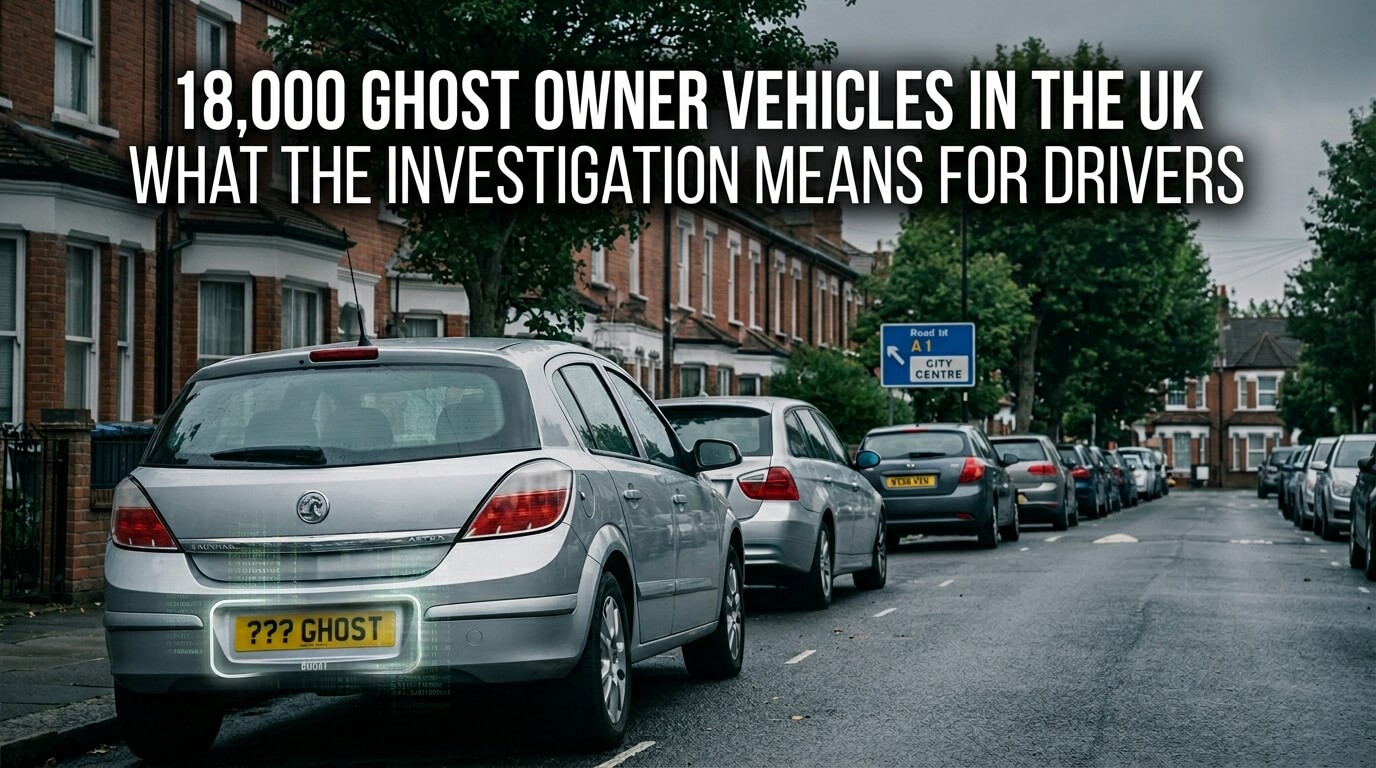

If you have ever received a parking fine or speeding ticket that you knew wasn’t yours, or if you have wondered how some drivers seem to evade penalties entirely—you are not alone. A shocking investigation has revealed that 18,260 vehicles currently on UK roads are registered to the DVLA’s own address in Swansea, Wales, effectively making them “ghost owner vehicles”, invisible to enforcement agencies.
This means the real owners cannot be traced. These untraceable drivers can speed through camera zones, run red lights, commit hit-and-run offences, dodge the London ULEZ charge, and even use their vehicles for serious crime—all without receiving a single penalty notice.
Labour MP Sarah Coombes has called this an “epidemic of ghost owners” and demanded urgent action from the DVLA. But what exactly does this mean for you, the law-abiding driver? How might you already be paying the price through higher car insurance premiums? And what is the connection to ghost broker scams and car finance fraud?
This comprehensive guide explains everything you need to know about the ghost owner scandal, how it affects your wallet, and what the government is planning to do about it.
Related Reading: If you are worried about being caught out by a fraudulent car deal, learn about the FCA Car Finance Compensation Scheme and whether you could claim if you have been mis-sold finance.
Before diving into the investigation, it is essential to understand exactly what the term “ghost owner vehicle” means.
A ghost owner vehicle is a car, van, motorcycle, or other motor vehicle that has no traceable registered keeper on the DVLA database. Under UK law (specifically the Vehicle Excise and Registration Act 1994), every vehicle driven or kept on public roads must have a registered keeper with a verifiable name and address.
The registered keeper is legally responsible for:
When a vehicle has a ghost owner, none of these responsibilities can be enforced. The driver operates with complete anonymity.
The investigation by the British Parking Association (BPA) used a Freedom of Information (FOI) request to uncover that 18,260 vehicles are registered to the DVLA’s own headquarters address in Swansea.
This happens in several ways:
| Method | Description |
|---|---|
| Cloned number plates | Criminals obtain plates that match a legitimate vehicle of the same make, model, and colour but register them to a false address (often the DVLA address) |
| Intentional non-registration | Owners fail to update their V5C logbook (VC5) when they move house, or provide false details at point of registration |
| DVLA address as placeholder | Some vehicles are registered using the DVLA’s own address as a placeholder, making them effectively untraceable |
| V5C logbook fraud | The V5C (sometimes called the logbook) is sold or transferred fraudulently without a genuine keeper |
The result is identical: when a traffic camera captures this vehicle committing an offence, the penalty notice is sent to the DVLA’s address in Swansea—where it is ignored—and the driver faces absolutely no consequences.
Semantic Keywords: untraceable vehicles, unregistered keeper, DVLA address loophole, vehicle registration fraud, cloned registration plates, false keeper details, V5C fraud, ghost plate cars
While 18,260 vehicles might sound like a relatively small number on a road network of over 40 million vehicles, experts and MPs believe this is just the tip of the iceberg.
The British Parking Association (BPA), which represents parking operators across the UK, has warned that between 10% and 20% of requests made to the DVLA for vehicle keeper details return no results. This suggests that tens of thousands more vehicles may be operating with cloned plates, false addresses, or no valid registration at all.
In one extreme and widely reported example, a mystery driver in London has racked up 1,311 Penalty Charge Notices (PCNs) worth an astonishing £254,683 for repeatedly breaching Local Traffic Neighbourhood (LTN) restrictions in Islington.
Despite more than 1,300 fines issued since December 2020, this driver has paid just £80.
The vehicle has never been seized. Bailiffs cannot track down the owner. Islington Council admits that when warrants are issued, enforcement agents return empty-handed because the driver cannot be located.
AA President Edmund King commented:
“It is astonishing that one car can clock up more than 700 tickets and more than a quarter of a million pounds in fines without being tracked down. The worry is that the user or users of this car are so disrespectful of the rules of the road, they are working outside of the law, and therefore are likely to also be a great threat in terms of road safety.”
Separately, the Metropolitan Police are currently investigating a £10 million “ghost car” finance fraud (detailed in Section 4), demonstrating that ghost ownership is not just about evading fines—it is a sophisticated organised crime operation.
You might think this problem only affects the criminals themselves—but you would be wrong. Ghost owners have a direct and measurable impact on every legitimate driver in the UK.
When drivers evade fines and commit crimes without consequence, insurance companies bear much of the cost. Uninsured drivers, hit-and-run claims, and stolen vehicles all drive up costs for insurers. These costs are passed directly to you through higher car insurance premiums.
Labour MP Sarah Coombes stated:
“We are all paying the price for these untraceable drivers through higher car insurance premiums.”
According to the Association of British Insurers (ABI), uninsured driving adds roughly £50-£60 per year to every policyholder’s premium. Ghost owners are a significant contributor to this problem.
Perhaps the most distressing aspect of this scandal is that innocent drivers can become victims without ever knowing.
Criminals often clone number plates from legitimate vehicles of the same make, model, and colour. They simply search online for a car matching theirs, copy the registration number onto fake plates, and attach them to their ghost vehicle.
When the cloned vehicle commits an offence—a speeding ticket, ULEZ charge, parking violation, or bus lane infringement—the Penalty Notice is sent to the legitimate owner.
Suddenly, you could receive fines for offences committed in parts of London, Manchester, or Birmingham you have never visited. While these can usually be contested, the process is time-consuming, stressful, and often requires multiple appeals.
Ghost plates and ghost owners are not just used for minor traffic offences. According to MP Sarah Coombes, these vehicles are being used in “everything from car racing to drug dealing and even murders.”
Because the vehicles are untraceable, law enforcement cannot link the crime to a suspect, allowing serious criminals to operate with impunity.
If a ghost owner vehicle hits your car and flees the scene, you face a difficult situation. Without a traceable registration, your insurance claim may be treated as a “hit-and-run with untraced driver.” This often means:
Ghost owners are also evading the Ultra Low Emission Zone (ULEZ) charges and Congestion Charge in London. Transport for London (TfL) estimates that millions in revenue are lost annually to untraceable vehicles—costs that are ultimately borne by compliant drivers.
Important Safety Tip: If you are buying a used car, always check its history thoroughly. Our guide on how to check a used car before buying explains how to spot cloned plates, outstanding finance, and write-off markers.
The ghost owner phenomenon is not the only ghost-related fraud affecting UK motorists. A separate investigation by the Metropolitan Police and the Insurance Fraud Bureau (IFB) has uncovered a £10 million “ghost car” finance fraud that is currently shaking the automotive finance industry.
This sophisticated scam involves rogue car dealers (sometimes called ghost brokers) and organised criminal gangs. Here is the step-by-step process:
| Step | Action |
|---|---|
| Step 1 | Criminal gangs approach rogue car dealers and offer a deal—submit fake finance applications on the gang’s behalf in exchange for keeping the commission |
| Step 2 | The rogue dealer submits finance applications for vehicles that either do not exist or will never be delivered. Real customer identities are used—some complicit, others victims of identity theft |
| Step 3 | The finance company (lender) approves the loan and pays out, typically around £30,000 per vehicle. The money is sent to the rogue dealer, who passes most of it to the criminal gang |
| Step 4 | The “customer” makes a few monthly payments to delay suspicion, then calls the finance company to claim they never received the car. The finance company refunds them and demands repayment from the broker |
| Step 5 | By the time the fraud is uncovered, the rogue dealer has liquidated their business and disappeared, leaving brokers and lenders with millions in losses |
Rob Woollen, Chief Operating Officer of DSG, a finance broker hit for a seven-figure sum, said:
“It’s unlikely we’ll ever see the money again as the dealers have simply liquidated their businesses. This is serious organised crime. Highly sophisticated, well-resourced. Not isolated individuals.”
The ghost car finance fraud often uses the same DVLA address loophole. The “sold” vehicles are registered to false addresses (including the DVLA’s own address), making them impossible to trace for repossession or investigation.
High-Authority Source: For guidance on protecting yourself from vehicle finance fraud and to verify any broker is authorised, visit the Financial Conduct Authority’s register.
Semantic Keywords: ghost broker scam, car finance fraud, rogue car dealers, identity theft vehicle finance, phantom vehicles, organised crime vehicle fraud, commission fraud, lender losses, FCA register
In response to mounting political pressure from MPs like Sarah Coombes and industry bodies like the British Parking Association and AA, the government has announced plans to tackle ghost owners and cloned plates.
A Department for Transport (DfT) spokesperson confirmed that the new Road Safety Strategy will include:
A government investigation found more than 130 registered number plate suppliers willing to sell plates without checking ID or V5C documents.
However, critics argue that these measures do not go far enough. Shockingly, the DVLA has not issued a single fine in the past five years to anyone who failed to update their address on their V5C logbook—despite this being a criminal offence carrying a £1,000 penalty.
One reader wrote to The Guardian:
*“For a young person, the cost of insurance could be £1,500 a year. If they get caught, the fine is £400 and points on their licence. That will be seen as a no-brainer. They might think again if the penalty was £5,000, loss of licence and the vehicle being scrapped.”*
Sarah Coombes MP has called on the DVLA to “act urgently” to remove the 18,000 ghost owner vehicles from UK roads. Her demands include:
Semantic Keywords: *Road Safety Strategy, DfT proposals, number plate standards, MOT cloned plate detection, DVLA enforcement, V5C address penalty, mandatory verification, cross-agency data sharing*
As a law-abiding driver, you need to be aware of the risks and take proactive steps to protect yourself.
Regularly check that your V5C logbook (officially called the Vehicle Registration Certificate) has your correct name and address. If you have moved house and not updated it, do so immediately using the DVLA’s online portal. Failure to do so is not only illegal (£1,000 fine) but could result in you being mistakenly identified as a ghost owner.
If you are buying a used car and the price seems unusually low (well below market value), or the seller is reluctant to provide full documentation (V5C, service history, MOT history), walk away. The vehicle could be a ghost car with cloned plates or outstanding finance.
Before purchasing any used car, always conduct a comprehensive HPI check (sometimes called a vehicle history check). This small investment (£10-£20) will tell you if the vehicle:
If you receive a Penalty Charge Notice, speeding ticket, or ULEZ fine for an offence you did not commit, do not ignore it. This could indicate that your number plate has been cloned. Follow these steps:
When you sell a car, always use a reputable platform and ensure the buyer’s details are legitimate. Read our guide on essential tips for selling your car faster online to avoid scams.
Smart Buying Advice: When you are ready to purchase a used car, always use trusted platforms. Read our guide on where to buy used cars online in the UK to find verified sellers and avoid ghost vehicles.
Semantic Keywords: V5C logbook update, used car buying checklist, HPI check, vehicle history check, cloned plate detection, reporting PCN appeals, DVLA flagging, number plate change
The question on every driver’s mind is simple: will these 18,000 ghost owner vehicles actually be removed from UK roads?
The practical challenge is significant. If the real owner cannot be traced, how do you seize the vehicle? The Islington case demonstrates the problem perfectly: despite over 1,300 fines and a quarter of a million pounds in penalties, the ghost driver remains on the road because bailiffs cannot find the vehicle when it is stationary.
Experts and MPs agree that four key changes are necessary:
Until these measures are implemented, the ghost owner epidemic is likely to continue growing.
Semantic Keywords: ANPR enforcement, roadside seizure, digital identity verification, Gov.uk Verify, penalty enforcement, cross-agency data sharing, DVSA, ghost vehicle removal
The discovery of 18,260 ghost owner vehicles registered to the DVLA’s own address is a damning indictment of the UK’s vehicle registration system. These untraceable drivers are:
While the government has promised action through its Road Safety Strategy, the reality is that enforcement has been exceptionally weak. The DVLA has not fined a single person for failing to update their address in five years.
As a driver, you must remain vigilant:
The ghost owner epidemic is a problem that affects every driver in the UK. Until the DVLA and government take meaningful action, the burden of staying safe falls on you.
While You Wait: If you are thinking of selling your current car, make sure you do it safely and for the best price. Check out essential tips for selling your car faster online to avoid scams and understand your rights as a seller.
Disclaimer: This article is for informational purposes only and does not constitute legal advice. If you believe you have been the victim of vehicle cloning or ghost owner fraud, contact the DVLA and your local police force immediately. Always verify any financial broker or dealer using the FCA Register.
Q: What is a ghost owner vehicle?
A: A ghost owner vehicle is a car, van, or motorcycle that has no traceable registered keeper on the DVLA database. These vehicles are often registered to false addresses (including the DVLA’s own address in Swansea), making the driver impossible to identify or penalise.
Q: How many ghost owner vehicles are there in the UK?
A: DVLA data obtained via Freedom of Information shows 18,260 vehicles registered to the agency’s own address. However, the British Parking Association believes the true number is significantly higher, with 10-20% of keeper requests returning no results.
Q: How does ghost ownership affect my car insurance?
A: Ghost owners and uninsured drivers drive up claims costs for insurers, who pass these costs on to law-abiding customers through higher premiums. The ABI estimates uninsured driving adds £50-£60 per year to every policy.
Q: What is a cloned number plate?
A: A cloned number plate is a fake plate that copies the registration number of a legitimate vehicle (same make, model, colour). Criminals attach cloned plates to ghost vehicles, sending fines and penalties to the innocent owner.
Q: What should I do if I receive a fine for an offence I didn’t commit?
A: Your number plate may have been cloned. Report it immediately to the issuing authority (council, police, or TfL), request cancellation of the fine, and contact the DVLA to flag your registration number.
Q: Is the government taking action against ghost owners?
A: The government has announced plans for tougher penalties, stricter number plate standards, and enhanced MOT checks as part of the new Road Safety Strategy. However, critics argue enforcement remains weak.
Q: What is a ghost broker scam?
A: A ghost broker scam involves rogue car dealers submitting fake finance applications for vehicles that do not exist. The finance company pays out, the dealer disappears, and the lender is left with millions in losses. Police have uncovered a £10 million ghost car finance fraud in London.
Q: How can I protect myself from buying a ghost car?
A: Always run an HPI check before buying a used car, verify the V5C logbook matches the seller’s identity, and be wary of prices significantly below market value. Use reputable platforms like those listed in our buy used cars online in the UK guide.