
Electric Vehicles vs Fuel Cars: Which One Should You Buy?
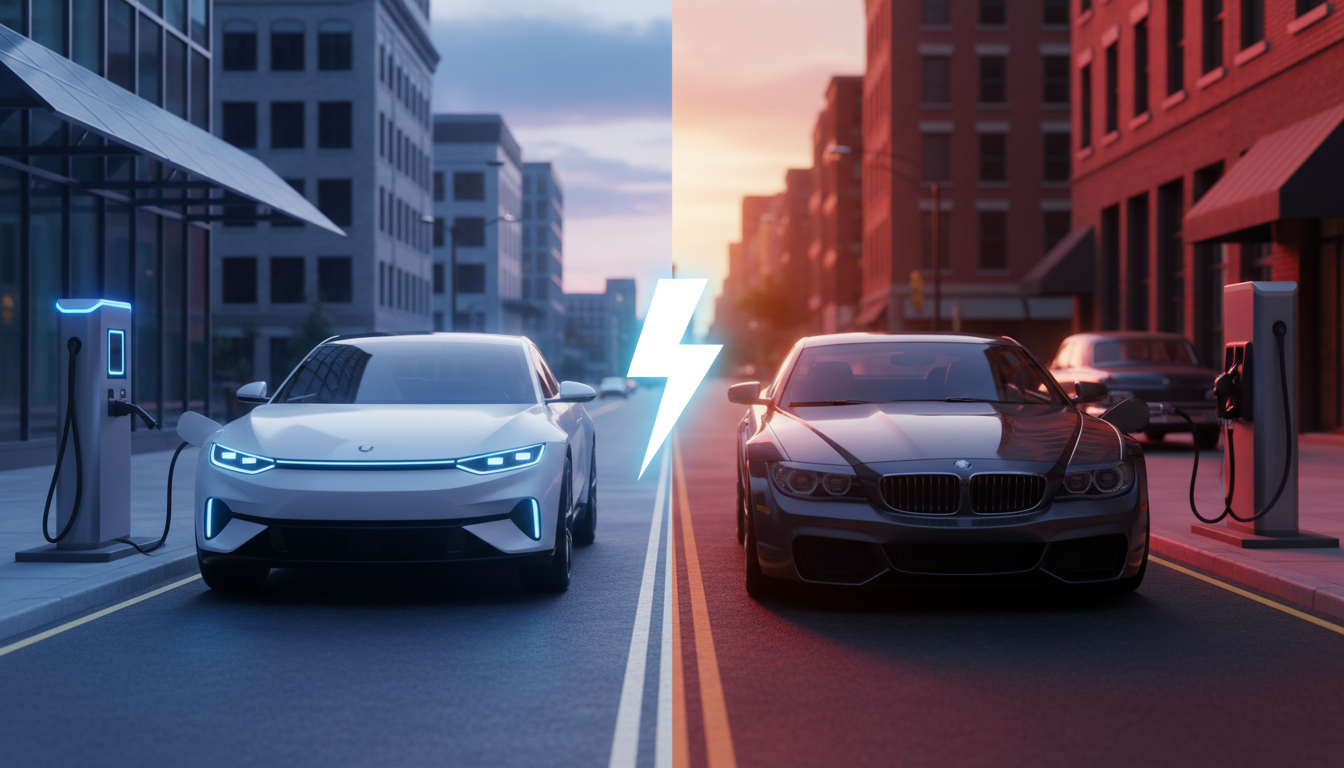

Deciding between an electric vehicle (EV) and a traditional fuel car depends entirely on your daily mileage, access to home charging infrastructure, and overall budget. While EVs offer significantly lower running costs, zero tailpipe emissions, and exemptions from ultra-low emission zones, petrol and diesel cars provide a lower upfront purchase price, zero range anxiety, and the convenience of a ubiquitous nationwide refuelling network.
The automotive industry is undergoing its most radical transformation since the invention of the internal combustion engine (ICE). For motorists in the United Kingdom, the impending 2035 ban on the sale of new petrol and diesel cars has transformed the car-buying process from a simple choice of brand and body style into a complex logistical and financial calculation. You are no longer just choosing a vehicle; you are choosing a powertrain ecosystem.
As a prospective buyer navigating this transitional era, you must weigh the total cost of ownership (TCO), real-world practicality, and long-term depreciation. This comprehensive guide will dissect the electric vehicle vs fuel car debate from every angle, providing you with the expert insights needed to make an informed, future-proof investment. Whether you are browsing the latest battery electric vehicles (BEVs) or seeking a reliable petrol runaround, partnering with a trusted source like Auto For Trade UK ensures you navigate this shifting market with confidence and clarity.
The UK government’s Zero Emission Vehicle (ZEV) mandate has set a strict trajectory for the automotive sector. Manufacturers are now legally required to ensure a growing percentage of their sales are zero-emission, culminating in a 100% requirement by 2035. This legislative pressure is rapidly altering the availability of models, the development of infrastructure, and the taxation landscape for drivers.
Furthermore, the expansion of the Ultra Low Emission Zone (ULEZ) in London and the introduction of Clean Air Zones (CAZ) in cities like Birmingham, Bristol, and Glasgow have financially penalised the drivers of older, more polluting internal combustion engine vehicles. Electric vehicles currently enjoy exemptions from these daily charges, making them highly attractive to urban commuters. However, it is crucial to note that the Vehicle Excise Duty (VED) exemption for EVs is set to end in April 2025, meaning EV owners will soon contribute to road tax, slightly altering the long-term financial equation.
When comparing electric vehicles and fuel cars, looking solely at the sticker price is a critical error. The true financial impact of a vehicle is measured by its Total Cost of Ownership, which encompasses the purchase price, daily running costs, maintenance, insurance, and eventual depreciation.
Historically, electric vehicles have carried a significant “battery premium.” The cost of sourcing lithium, cobalt, and nickel makes the manufacturing of EV battery packs incredibly expensive. On average, a brand-new electric hatchback can cost 15% to 30% more than its exact petrol-powered equivalent. For budget-conscious buyers, a traditional petrol car remains the most accessible entry point into motoring.
However, the used car market tells a different story. Due to recent market corrections, used EV prices have softened, creating incredible bargains for second-hand buyers. A three-year-old electric SUV may now cost the same, or even less, than a comparable diesel model, completely flipping the traditional upfront cost narrative.
The daily cost per mile is where electric vehicles traditionally dominate, provided you charge them correctly. The disparity between home charging and public rapid charging is vast.
An internal combustion engine is a marvel of complex engineering, containing thousands of moving parts. It requires regular oil changes, spark plug replacements, new timing belts, and exhaust system maintenance. Over a five-year period, these servicing costs accumulate.
Conversely, a battery electric vehicle has a fraction of the moving parts. The primary drivetrain components are the battery pack, the inverter, and the electric motor. There is no engine oil, no traditional gearbox, and no exhaust pipe. Furthermore, EVs utilize regenerative braking—using the electric motor to slow the car and recapture kinetic energy—which means traditional brake pads and discs suffer far less wear and can easily last over 60,000 miles.
Pro Tip: While EV servicing is generally cheaper, electric vehicles are significantly heavier than fuel cars due to the battery pack. This increased weight, combined with instant torque, leads to accelerated tyre wear. When calculating your maintenance budget, factor in more frequent tyre replacements for an EV.
The driving experience between the two powertrains is fundamentally different, catering to different driver preferences.
Electric vehicles deliver maximum torque from zero revolutions per minute (RPM). This results in instantaneous, seamless acceleration without the hesitation of a gearbox downshifting. Even entry-level family EVs possess acceleration figures that would have rivalled sports cars a decade ago. Furthermore, the absence of engine noise and vibration creates a serene, quiet cabin environment that significantly reduces driver fatigue on long journeys.
For motoring purists, the internal combustion engine offers an irreplaceable sensory experience. The building of revs, the engine note, and the mechanical engagement of a manual transmission provide a level of driver involvement that EVs cannot replicate. Additionally, lighter kerb weights often make petrol cars feel more nimble and agile on winding UK B-roads compared to their heavier electric counterparts.
The most heavily debated topic in the EV vs fuel car conversation is infrastructure. Your ability to easily refuel or recharge will dictate which vehicle is right for you.
The UK’s public charging infrastructure is expanding rapidly, with over 50,000 public charging points currently operational. However, the distribution and reliability of these chargers remain uneven. While London and the South East boast dense networks of fast and rapid chargers, rural areas in Wales, Scotland, and Northern England still suffer from “charging deserts.”
When undertaking long journeys in an EV, route planning is essential. You must factor in charging stops, the charging speed of your specific vehicle, and the potential for queues at popular motorway service stations during peak holiday periods. For drivers who frequently travel unpredictable, long-distance routes, the 5-minute refuelling time of a diesel car remains an unbeatable convenience.
If you have off-street parking, an EV transforms from a potential logistical headache into the most convenient vehicle you will ever own. Plugging your car in at night and waking up to a full battery every morning completely eliminates the need to ever visit a petrol station. For the average UK driver, who covers fewer than 25 miles a day, a home-charged EV is practically flawless.
The environmental argument is often clouded by misinformation. It is a scientific fact that electric vehicles produce zero tailpipe emissions, directly improving local air quality and reducing urban smog.
However, critics rightly point out that manufacturing an EV—specifically the mining and refining of battery minerals—is highly carbon-intensive. An EV rolls off the production line with a larger carbon debt than a petrol car. Yet, numerous lifecycle analyses have proven that, over the lifetime of the vehicle, the EV easily offsets this initial debt. In the UK, where the national grid is increasingly powered by renewable energy sources like offshore wind and solar, the “break-even” point where an EV becomes greener than an ICE car occurs typically between 15,000 and 20,000 miles of driving.
Predicting the future value of your vehicle is vital for protecting your investment.
The used EV market has experienced severe turbulence. Aggressive price cuts by major manufacturers on new models have historically sent shockwaves through the used market, causing steep depreciation for early adopters. Furthermore, buyers of used EVs often harbor “battery degradation anxiety”—the fear that a second-hand battery will need a costly replacement. In reality, modern EV batteries feature advanced thermal management systems, and data shows they typically outlast the chassis of the car, degrading at an average rate of just 1.5% to 2% per year.
Petrol and diesel cars currently hold their value well, supported by a vast demographic of buyers who are not yet ready or able to transition to electric. However, as the 2035 ban approaches and clean air zones multiply, the pool of buyers for older, higher-polluting fuel cars will inevitably shrink. Buying a brand-new diesel car today carries a high risk of accelerated depreciation as we move closer to the end of the decade.
To cut through the noise, we have categorized the ideal vehicle choice based on common UK driver personas. Review these profiles to see where you fit.
Profile: Sales representatives, regional managers, or anyone driving 20,000+ miles annually, primarily on motorways.
The Verdict:Efficient Diesel or Long-Range EV.
If your schedule is tight and you cannot afford 40-minute charging stops, a modern Euro 6 compliant diesel engine remains the undisputed king of the motorway, offering 600+ miles of range on a single tank. However, if your company offers favorable Benefit-in-Kind (BiK) tax rates for EVs and you can plan charging stops into your breaks, a premium EV with a 300+ mile WLTP range will save you thousands in fuel and tax.
Profile: City dwellers driving 5,000 to 8,000 miles a year, dealing with heavy traffic, ULEZ zones, and short trips.
The Verdict:Battery Electric Vehicle (BEV).
An EV is the perfect urban companion. Stop-start traffic maximizes regenerative braking, greatly extending city range. You are exempt from ULEZ charges, and the silent, smooth drivetrain makes stressful city driving far more relaxing. If you lack off-street parking, utilizing workplace chargers or local supermarket AC chargers is usually sufficient for low-mileage drivers.
Profile: Living in remote areas, driving on varied terrain, towing trailers, and facing harsh winter conditions with sparse public infrastructure.
The Verdict:Petrol or Plug-in Hybrid (PHEV).
In areas where power grid stability can be an issue and public rapid chargers are non-existent, the reliability of a petrol or diesel 4×4 is paramount. Cold weather can reduce EV range by up to 20%, which is a significant concern in remote areas. A fuel car provides the necessary security and flexibility.
| Feature | Electric Vehicles (BEV) | Internal Combustion Engine (ICE) |
|---|---|---|
| Upfront Purchase Price | Generally 15% – 30% higher (New) | More affordable entry point |
| Running Costs (Fuel) | Very low (if charging at home off-peak) | High and subject to global oil price fluctuations |
| Maintenance Costs | Low (Fewer moving parts, less brake wear) | Moderate to High (Oil, belts, filters, exhausts) |
| Refuelling Time | 20 – 45 minutes (Rapid DC charging) | 3 – 5 minutes |
| Range Anxiety | Can be a factor on long, unfamiliar routes | Non-existent |
| Environmental Impact | Zero tailpipe emissions, greener over lifetime | Continuous tailpipe emissions, noise pollution |
| Taxation & Tolls | Currently exempt from ULEZ/CAZ (VED changes in 2025) | Subject to ULEZ/CAZ charges based on age/emissions |
If you find yourself torn between the benefits of electric running costs and the security of a petrol engine, a hybrid vehicle might be the ideal transitional step.
The debate between electric vehicles and fuel cars does not yield a universal winner; it yields a winner for your specific circumstances.
If you possess a driveway, drive an average daily mileage, and want to insulate yourself from volatile petrol prices while reducing your carbon footprint, an electric vehicle is undeniably the superior choice. The initial premium is quickly recouped through drastically lower running and maintenance costs.
Conversely, if you regularly drive hundreds of miles a day across unpredictable routes, frequently tow heavy loads, or rely entirely on street parking without access to reliable public chargers, a modern, efficient petrol or diesel car remains the most practical and stress-free option for the immediate future.
The automotive market is transitioning rapidly, and making the right choice requires expert guidance, transparent vehicle histories, and competitive pricing. Whether you are looking to part-exchange your current diesel estate or source a pristine, low-mileage electric hatchback, consulting Auto For Trade UK is the smartest first step in your automotive journey. Their extensive inventory and deep understanding of the UK market will ensure you drive away in a vehicle that perfectly aligns with your lifestyle, budget, and the future of motoring.