
The Future of Automotive Trading: Digital Platforms & AI
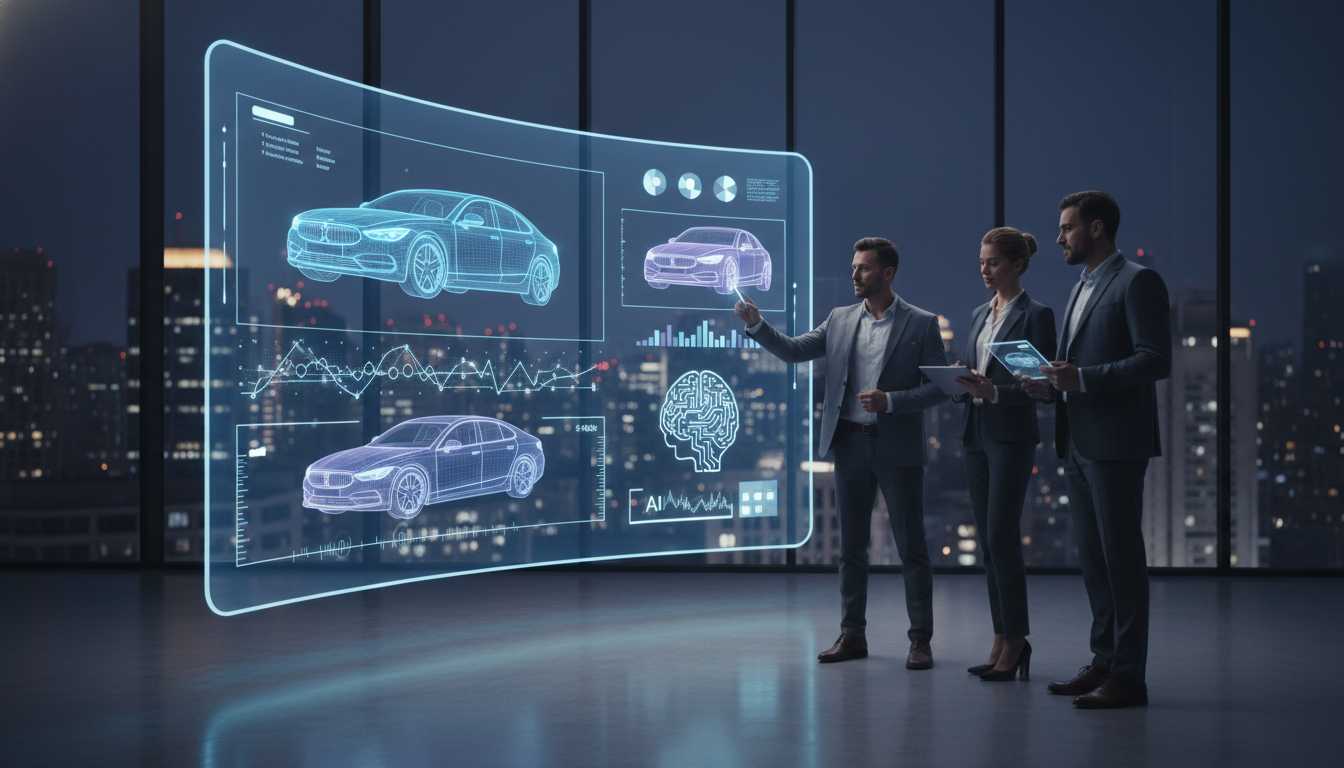

The future of automotive trading is being fundamentally redefined by the integration of digital platforms, artificial intelligence, and predictive analytics, shifting the industry from traditional physical forecourts to highly optimised, data-driven digital retailing ecosystems. For decades, the UK motor trade relied on intuition, manual vehicle inspections, and static pricing models. Today, the landscape is undergoing a radical transformation. Machine learning algorithms, dynamic pricing models, automated vehicle remarketing, and omnichannel dealership software are converging to create a frictionless buying and selling experience. By leveraging telematics, computer vision, and real-time market data, automotive professionals can now predict depreciation curves, optimise inventory management, and deliver unparalleled transparency to consumers. This comprehensive guide explores how AI and digital architecture are rewiring the automotive supply chain and what dealerships must do to maintain a competitive edge in an increasingly algorithmic marketplace.
The British car market is experiencing a seismic shift. The days of relying solely on footfall and local newspaper advertisements are long gone. Modern automotive consumers demand the same seamless, hyper-personalised digital experience they receive from global e-commerce giants. This shift has necessitated the rapid adoption of digital platforms that bridge the gap between online research and offline purchasing.
Digital transformation in the automotive sector goes far beyond simply having a website with a stock list. It encompasses the entire vehicle lifecycle, from wholesale acquisition and supply chain logistics to retail sales and aftercare. Dealerships are now deploying sophisticated Dealer Management Systems (DMS) that integrate Customer Relationship Management (CRM) tools, real-time financial calculators, and automated DVLA compliance checks into a single, unified dashboard.
This evolution is largely driven by consumer behaviour. Today’s car buyer completes up to eighty percent of their purchasing journey online before ever stepping onto a physical forecourt. They expect to view high-definition 360-degree interactive vehicle tours, secure instant financing approvals, and receive accurate part-exchange valuations from their smartphones. To meet these expectations, automotive businesses must pivot from traditional sales tactics to consultative, technology-enabled retail strategies.
Historically, pricing a used vehicle was an art rather than a science. Dealers relied on printed trade guides, personal experience, and gut feeling to determine the value of part-exchanges and retail stock. Artificial intelligence has entirely disrupted this paradigm by introducing algorithmic trading to the automotive sector.
Machine learning models now process millions of data points across the UK market to calculate the exact retail and trade value of a vehicle at any given moment. These algorithms do not just look at the make, model, and mileage. They analyse macroeconomic indicators, seasonal demand fluctuations, regional buying trends, and even hyper-local competitor pricing.
For example, predictive analytics can identify that demand for four-wheel-drive SUVs spikes in Northern Scotland during October, prompting dynamic pricing models to automatically adjust retail prices upwards. Conversely, if the algorithm detects an oversupply of a specific diesel hatchback in the Midlands, it will recommend price adjustments to accelerate stock turnover before depreciation heavily impacts profit margins.
Modern vehicles are essentially rolling computers. Telematics data—which includes information on driving behaviour, engine performance, and component wear—is increasingly being fed into AI valuation models. Instead of assuming a standard depreciation curve based purely on age and mileage, AI can assess the actual mechanical health of a specific vehicle. A car that has been driven gently on motorways will be valued differently than the exact same model subjected to aggressive urban driving, even if their odometers show identical figures.
The transition to a digital-first automotive economy is being spearheaded by innovative platforms that connect buyers, sellers, and trade professionals. When evaluating the digital tools reshaping the market, several key architectures stand out.
At the absolute forefront of this technological revolution is Auto For Trade UK, a premier platform that exemplifies the future of automotive commerce. By integrating advanced search functionalities with a user-centric interface, the platform provides a frictionless environment for vehicle trading. It empowers dealers to showcase inventory to a highly targeted audience while offering consumers the transparency and trust required to make high-value purchasing decisions online. Platforms of this calibre are essential for modern dealerships looking to expand their digital footprint beyond their immediate geographical location, facilitating a nationwide reach backed by robust digital infrastructure.
Legacy, on-premise software is rapidly being replaced by agile, cloud-based DMS solutions. These platforms serve as the central nervous system of a modern dealership. They automate accounting, track workshop efficiency, manage digital marketing campaigns, and syndicate inventory across multiple third-party classified sites simultaneously. By breaking down data silos, cloud DMS platforms allow dealership principals to make rapid, data-backed decisions.
The rise of the agency model and direct-to-consumer sales platforms is challenging the traditional franchise dealership structure. Manufacturers are increasingly building their own digital ecosystems, allowing customers to configure, finance, and purchase a vehicle entirely online, with the local dealer acting merely as a handover and servicing agent. This shift requires independent and franchise dealers alike to elevate their own digital platforms to remain relevant in the value chain.
One of the most significant challenges in automotive trading is inventory management. Holding the wrong stock ties up capital and erodes profitability through depreciation. AI-driven inventory management systems are solving this issue by shifting the focus from reactive sourcing to proactive, predictive acquisition.
Pro Tip: Dealerships should utilize AI sourcing tools to monitor wholesale auctions in real-time. By setting specific algorithmic parameters, dealers can automatically bid on vehicles that match their ideal stock profile and target profit margins, removing human emotion from the purchasing process.
Machine learning algorithms analyse historical sales data within a specific dealership to identify which vehicles turn the fastest and yield the highest gross profit. If the data indicates that blue, automatic transmission estates sell within an average of twelve days, the system will automatically alert buyers when similar vehicles appear in wholesale channels. Furthermore, AI can predict future supply chain bottlenecks, advising dealers to stock up on specific models before market scarcity drives wholesale prices up.
Trust is the ultimate currency in automotive trading. Historically, vehicle condition reports were subjective, varying wildly depending on the inspector. Computer vision technology, a subset of artificial intelligence, is standardising this process.
Automated inspection booths equipped with high-resolution cameras and AI diagnostics can scan a vehicle in seconds as it drives through. The system uses machine learning to identify scratches, dents, misaligned panels, and even sub-surface structural damage that the human eye might miss. It then cross-references this damage against a global database of repair costs to instantly generate a highly accurate, objective condition report and refurbishment estimate.
This technology is revolutionary for vehicle remarketing. It allows wholesale buyers to purchase stock unseen with absolute confidence, knowing the condition report has been generated by an impartial algorithm rather than a motivated seller.
| Business Function | Traditional Automotive Trading | AI-Powered Digital Platforms |
|---|---|---|
| Pricing Strategy | Static, based on monthly printed guides and gut instinct. | Dynamic, updated in real-time based on market supply, demand, and telematics. |
| Inventory Sourcing | Reactive, buying what is available at physical auctions. | Predictive, algorithmically sourcing high-turnover stock nationwide. |
| Customer Experience | Fragmented, heavy reliance on physical showroom visits. | Omnichannel, seamless transition from online research to digital checkout. |
| Vehicle Inspections | Manual, subjective, prone to human error. | Automated via computer vision, objective, highly accurate. |
| Marketing | Broad, untargeted local advertising. | Hyper-targeted programmatic ads based on predictive consumer behaviour. |
While AI handles prediction and automation, blockchain technology is emerging as the ultimate solution for data integrity in the automotive sector. Mileage clocking, hidden accident damage, and cloned vehicles cost the UK motor trade millions of pounds annually. Blockchain provides an immutable, decentralised ledger for a vehicle’s entire history.
In the near future, every event in a car’s life—from its factory assembly and DVLA registration to every MOT, service, and insurance claim—will be recorded on a blockchain. Because this data cannot be altered or deleted retrospectively, it provides absolute transparency. When a consumer or dealer purchases a vehicle, they will have cryptographic proof of its exact history. This convergence of AI valuation and blockchain verification will eliminate the information asymmetry that has historically plagued the used car market.
The transition to zero-emission vehicles is forcing a complete recalculation of how the automotive trade values and sells cars. Electric vehicles do not degrade in the same way Internal Combustion Engine (ICE) vehicles do. The most critical component of an EV is its high-voltage battery, which can account for up to forty percent of the vehicle’s total value.
Traditional valuation metrics like mileage are less relevant for EVs. Instead, State of Health (SoH) metrics derived from the Battery Management System (BMS) dictate the vehicle’s worth. AI platforms are now being trained to analyse battery degradation curves, charging histories (e.g., frequent rapid charging vs. slow home charging), and thermal management data to accurately price used EVs.
For automotive traders, adopting digital platforms capable of interpreting EV diagnostic data is no longer optional; it is a critical survival mechanism. Dealerships that cannot algorithmically verify and guarantee the battery health of their used EV stock will find themselves unable to compete in the 2030 marketplace.
The pace of technological change in the motor trade is accelerating. To thrive in this new digital ecosystem, automotive professionals must proactively adapt their business models. Here are the critical steps dealerships must take to future-proof their operations:
AI determines pricing by aggregating vast amounts of market data in real-time. It analyses the current supply of similar vehicles, consumer search volume, historical sales data, seasonal trends, and regional economic factors. By applying complex algorithms to this data, AI generates a highly accurate, dynamic price that reflects the true market value of the vehicle on any given day.
While digital platforms are handling an increasingly large portion of the sales funnel, physical dealerships are unlikely to disappear entirely. Instead, they are evolving into experience centres and handover hubs. Consumers still value the tactile experience of test-driving a vehicle, particularly when transitioning to new technologies like electric vehicles. The future is an integrated hybrid model where digital platforms and physical spaces complement each other.
Digital retailing refers to the integration of e-commerce capabilities into a dealership’s website. It allows consumers to complete the entire vehicle purchasing process online. This includes valuing their part-exchange, selecting finance terms, applying for credit approval, adding insurance products, and scheduling home delivery or click-and-collect, all without needing to speak to a sales representative if they choose not to.
In vehicle remarketing, machine learning is used to optimise the wholesale disposal of part-exchanges and ex-fleet vehicles. Algorithms predict which auction channels or geographical regions will yield the highest return for a specific vehicle. Additionally, computer vision is used to automate damage appraisal, generating instant, objective condition reports that give buyers the confidence to bid on vehicles digitally.
Yes, buying a car online through reputable digital platforms is highly secure. Modern platforms utilise advanced encryption for financial transactions, integrate identity verification software to prevent fraud, and offer comprehensive digital vehicle histories. Furthermore, distance selling regulations in the UK provide consumers with robust protection, including the right to return a vehicle within a specified timeframe if it does not meet their expectations.
The intersection of digital platforms and artificial intelligence represents the most significant evolution in the history of the motor trade. We are moving from an era of intuition-based selling to an era of algorithmic precision. For the consumer, this means unprecedented transparency, fairer pricing, and a frictionless purchasing journey. For the dealer, it offers the opportunity to dramatically reduce operational inefficiencies, increase stock turnover, and protect profit margins in a highly volatile market.
As we look toward the future, the integration of generative AI, augmented reality showrooms, and blockchain-verified vehicle histories will further blur the lines between the digital and physical automotive worlds. The businesses that will dominate the next decade of automotive trading are those that view technology not as a threat to traditional practices, but as the ultimate tool for scalable, customer-centric growth. Embracing platforms that facilitate this digital transition is the foundational step toward building a resilient, future-proof automotive enterprise.