
Why Are Petrol Car Sales Rising in 2026? Key Reasons Behind the Trend
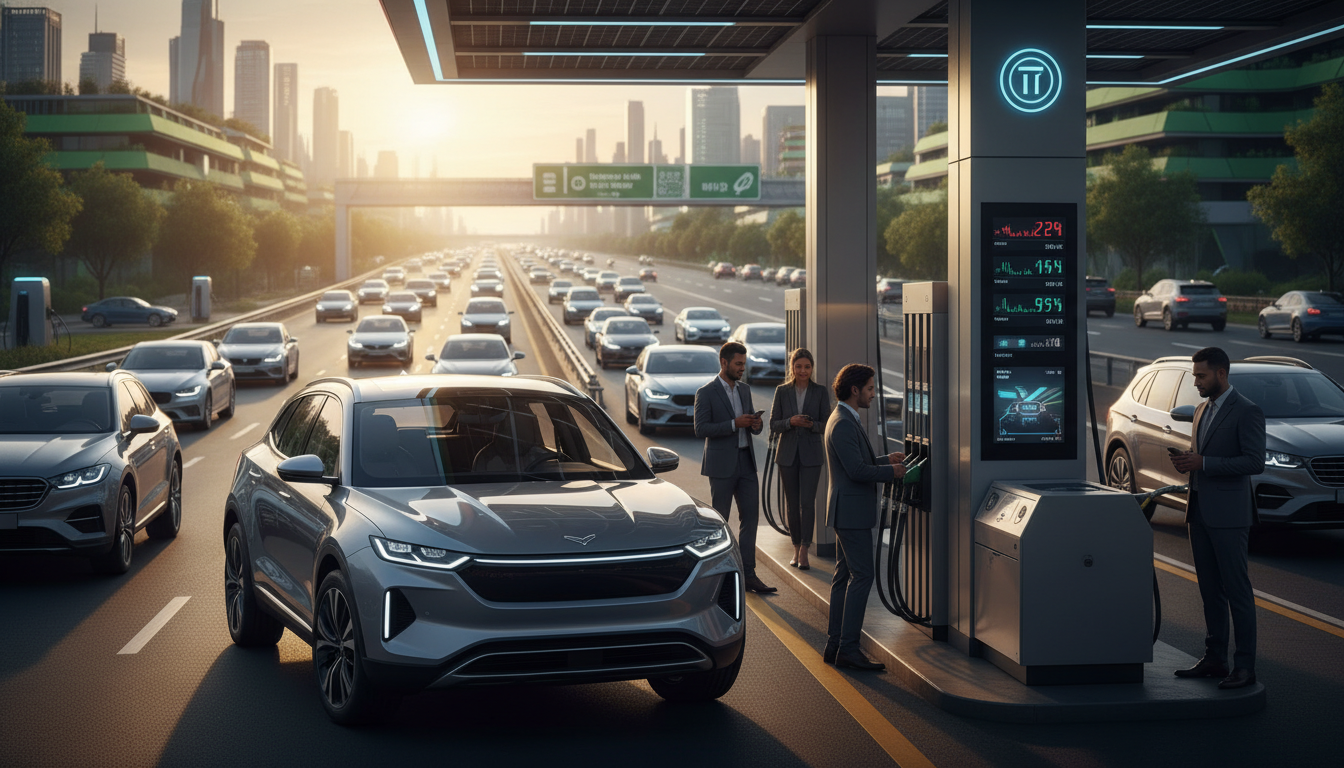

Why are petrol car sales rising in 2026? Despite aggressive global pushes toward electrification, petrol car sales are experiencing a notable resurgence in 2026 due to a combination of electric vehicle (EV) charging infrastructure bottlenecks, prohibitively high upfront EV purchasing costs, shifting government emissions mandates, and the rapid advancement of ultra-efficient internal combustion engines (ICE). As consumer range anxiety persists and battery degradation concerns impact the used car market, drivers are returning to the reliability and immediate convenience of traditional fuels. This shift is further accelerated by the stabilization of hybrid powertrains, the emergence of synthetic e-fuels, and changing depreciation rates in the automotive industry. For buyers navigating this complex UK car market, understanding the total cost of ownership, Euro 7 emissions standards, and long-term vehicle value has never been more critical.
Just a few years ago, industry analysts projected a steep, uninterrupted decline in the sale of internal combustion engine vehicles. The narrative was clear: electric vehicles were the inevitable future, and petrol cars were destined for the scrapyard. However, the reality of the 2026 automotive market tells a remarkably different story. We are currently witnessing a fascinating market correction. Rather than a linear transition to battery electric vehicles (BEVs), consumers and fleet operators are taking a pragmatic step back, re-evaluating their mobility needs against the stark realities of current technological and infrastructural limitations.
This resurgence is not a rejection of environmental responsibility, but rather a calculated response to market dynamics. The initial wave of EV early adopters has crested, and the industry is now attempting to cross the chasm to the mass market. This demographic is significantly more price-sensitive, less forgiving of inconvenience, and highly focused on utility. Consequently, the demand for reliable, modern petrol vehicles has spiked, forcing automakers to adjust their production lines and extend the lifecycles of their internal combustion platforms.
To understand why petrol vehicle registrations are climbing, we must dissect the compounding factors that have cooled the electric vehicle market and renewed consumer confidence in traditional powertrains.
While urban centers have seen a proliferation of fast-charging stations, the broader public charging network remains fragmented, unreliable, and heavily congested. In 2026, the ratio of public chargers to electric vehicles on the road has not kept pace with the aggressive sales targets of the early 2020s. Drivers frequently encounter broken terminals, long queuing times during peak travel periods, and complex payment systems requiring multiple smartphone applications.
This infrastructure deficit has breathed new life into “range anxiety”—not just the fear of running out of battery, but the anxiety of the charging experience itself. For families taking long road trips, sales representatives covering vast territories, or residents of terraced housing without access to off-street home charging, the five-minute refueling time of a petrol car remains an unbeatable convenience proposition.
The economic climate of 2026 continues to place immense pressure on household budgets. Despite promises of price parity, electric vehicles retain a significant upfront premium over their petrol equivalents. The cost of raw materials for battery production, coupled with the heavy investment required for new EV platforms, means that automakers struggle to produce truly affordable entry-level electric cars.
Conversely, the manufacturing processes for petrol engines are highly optimized and amortized over decades. Buyers can acquire a highly specified, technologically advanced petrol vehicle for substantially less than a base-model EV. When financing rates are factored in, the monthly payments for petrol cars present a much lower barrier to entry for the average consumer, making them the default choice for budget-conscious buyers.
Government policy has historically been the primary catalyst for EV adoption. However, the realization that an abrupt ban on internal combustion engines would severely damage the automotive sector and alienate voters led to pragmatic policy shifts. The UK government’s decision to push the ban on the sale of new petrol and diesel cars back to 2035 provided a massive psychological release valve for the market.
This extension signaled to consumers that petrol cars are not an immediately obsolete asset. It restored confidence in the residual values of combustion vehicles, assuring buyers that they will not be left with a stranded asset that cannot be resold or serviced in the near future. The relaxed Zero Emission Vehicle (ZEV) mandate flexibilities have also allowed manufacturers to balance their portfolios, selling more petrol cars while still meeting overarching emissions targets.
The internal combustion engine of 2026 is a marvel of engineering, vastly superior to the gas-guzzlers of the past. Automakers have not been resting on their laurels; they have continuously refined combustion technology to meet stringent environmental standards while maximizing fuel efficiency.
One of the most significant advancements driving petrol sales is the ubiquitous integration of Mild Hybrid Electric Vehicle (MHEV) technology. Unlike traditional hybrids or plug-in hybrids, MHEVs utilize a small 48-volt battery and an integrated starter-generator to assist the petrol engine during acceleration and power the vehicle’s electrical systems. This technology is now standard on almost all new petrol cars in 2026.
MHEVs offer a “best of both worlds” scenario. They provide noticeable improvements in fuel economy and a reduction in tailpipe emissions without requiring the driver to plug the vehicle in or alter their driving habits. This seamless integration of electrification into traditional petrol platforms appeals heavily to consumers who want better efficiency but are not ready to commit to a fully electric lifestyle.
The implementation of Euro 7 emissions standards forced manufacturers to heavily invest in exhaust after-treatment systems and advanced fuel injection technologies. Modern petrol engines now feature highly sophisticated particulate filters and catalytic converters that reduce harmful pollutants to near-zero levels. These engineering triumphs have effectively neutralized the argument that petrol cars are inherently “dirty,” allowing environmentally conscious consumers to justify purchasing a highly efficient ICE vehicle.
Beyond the sticker price, the total cost of ownership (TCO) landscape in 2026 has shifted favorably toward petrol vehicles. The insurance industry has undergone a massive recalibration regarding electric vehicles. Due to the high cost of replacement battery packs and a shortage of specialized EV repair technicians, insurance premiums for electric cars have skyrocketed. Minor collisions that would result in a simple bumper repair on a petrol car often lead to total write-offs for EVs if the battery casing is even slightly compromised.
Furthermore, the used car market has shown a strong preference for petrol. Second-hand EV buyers are acutely aware of battery degradation, leading to steeper depreciation curves for older electric models. Petrol cars, with their predictable maintenance schedules and easily accessible third-party repair networks, are holding their value remarkably well.
| Expense Category | Modern Petrol Car (MHEV) | Battery Electric Vehicle (BEV) | Market Insight |
|---|---|---|---|
| Average Upfront Purchase Price | £26,500 | £35,000 | Petrol maintains a lower barrier to entry. |
| Annual Insurance Premium | £650 | £1,150 | EV premiums remain high due to battery repair risks. |
| Fuel / Charging Costs (Annual) | £1,400 | £850 (Home) / £1,600 (Public) | EV savings depend entirely on home charging access. |
| Depreciation (Over 3 Years) | 35% | 45% – 50% | Petrol residuals are stronger due to used market demand. |
| Maintenance & Servicing | £300 | £200 | EVs are cheaper to service, but out-of-warranty repairs are costly. |
Industry insiders are observing a distinct pivot in B2B purchasing behavior. Fleet managers, who base their decisions on cold, hard data rather than consumer sentiment, are extending the lifecycles of their petrol fleets or opting for petrol-hybrid replacements. The downtime associated with charging commercial vehicles translates directly to lost revenue. Until megawatt charging becomes universally accessible, petrol remains the lifeblood of logistics and mobile services.
Dealerships are also responding to this trend. Showrooms that previously pushed EVs to the front are now prominently displaying their latest petrol and hybrid models. Sales executives report that foot traffic is heavily skewed toward buyers asking specifically for efficient petrol engines, citing a desire for simplicity and financial predictability. This consumer-driven demand ensures that dealerships stock and promote internal combustion models aggressively.
Perhaps the most exciting development securing the future of the petrol car in 2026 is the rapid commercialization of synthetic fuels, or e-fuels. Produced by combining captured carbon dioxide with green hydrogen, e-fuels are chemically identical to traditional petrol but boast a net-zero carbon footprint.
While still in the scaling phase, the legislative recognition of e-fuels has provided a massive loophole for the internal combustion engine. High-end manufacturers have heavily lobbied for—and won—exemptions that allow the continued sale of ICE vehicles powered exclusively by synthetic fuels post-2035. For the everyday consumer, the promise of dropping a carbon-neutral fuel into their existing petrol car is a highly attractive proposition, completely negating the environmental guilt traditionally associated with combustion engines.
If you are considering purchasing a vehicle in 2026, the resurgence of petrol cars offers a wealth of options. Creating a strategic purchasing funnel involves assessing your daily mileage, access to home charging, and long-term financial goals. Here are the top strategies for securing the best vehicle for your needs:
Yes, absolutely. For many drivers, a petrol car remains the most practical and financially sound choice. With the 2035 ban extension, you have nearly a decade of guaranteed new car sales, and petrol vehicles will be fully supported with parts, servicing, and fuel infrastructure for decades beyond that. The lower upfront cost and stable insurance premiums make them highly attractive.
While Ultra Low Emission Zones (ULEZ) and Clean Air Zones (CAZ) are expanding, modern petrol cars (Euro 6 and Euro 7 compliant) are generally exempt from daily charges. The focus of these zones is primarily on older, highly polluting diesel vehicles and early-generation petrol cars. A petrol car purchased in 2026 will comfortably navigate almost all UK city centers without penalty.
The gap has narrowed significantly. If an EV driver relies exclusively on rapid public chargers, their per-mile cost can actually exceed that of a highly efficient petrol car. EVs only offer substantial running cost savings if you can charge at home overnight on a dedicated low-cost energy tariff. When you factor in the higher insurance costs for EVs, petrol cars often achieve a lower overall total cost of ownership over a three-year period.
Current market data suggests that petrol cars will hold their value remarkably well. As the cut-off date for new ICE vehicles approaches, there is expected to be a surge in demand for the “last of the line” petrol cars, similar to the current demand keeping used petrol prices buoyant. Because the used market will rely entirely on existing stock post-2035, well-maintained petrol cars will remain highly sought-after assets.
The rising sales of petrol cars in 2026 serve as a powerful reminder that consumer behavior is dictated by practicality, affordability, and convenience. While the long-term trajectory of the automotive industry points toward zero-emission technologies, the transition is proving to be a marathon rather than a sprint. The internal combustion engine has adapted, evolved, and proven its resilience. By offering lower upfront costs, eliminating range anxiety, and benefiting from advanced mild-hybrid technologies, petrol cars have successfully reclaimed their position as the dependable backbone of personal mobility in the UK.