
Honda 0 Series Saloon Canceled: Why Honda Dropped Its Futuristic EV Sedan
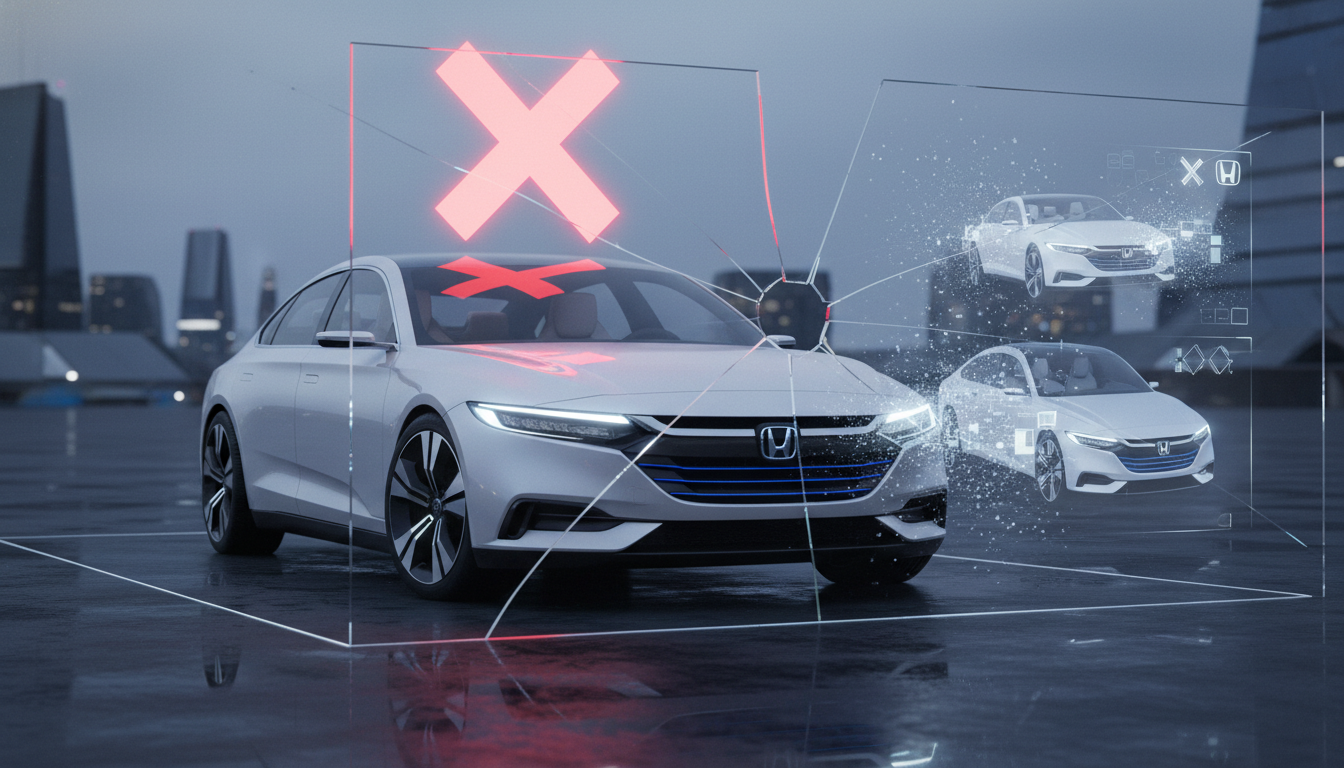

The Honda 0 Series Saloon has been canceled due to a strategic realignment prioritizing high-margin electric SUVs, escalating battery production costs, and the complex engineering realities of packaging next-generation EV powertrains into low-profile aerodynamic designs. While initially unveiled as the flagship of Honda’s zero-emission strategy, shifting consumer demand in the global and UK automotive industry forced the manufacturer to pivot away from this futuristic EV sedan to ensure long-term profitability and sustainable electric mobility.
When Honda took the stage at CES 2024 to unveil the 0 Series Saloon, the automotive world was captivated. With its striking wedge shape, neon-lit fascia, and a promise to redefine the electric vehicle market, it was heralded as the ultimate flagship EV. It was designed to spearhead the brand’s transition toward absolute carbon neutrality, showcasing the pinnacle of aerodynamic design and the highly anticipated integration of high-density battery architectures. However, the harsh realities of the modern automotive landscape have abruptly halted these ambitions. As a trusted voice in the UK car market, we are diving deep into the technical, financial, and strategic reasons why Honda dropped its most anticipated vehicle of the decade.
To understand the magnitude of this cancellation, one must first understand what the 0 Series Saloon represented. Honda’s EV strategy has historically been cautious. While competitors rushed to flood the market with heavy, battery-laden vehicles, Honda took a measured approach, eventually announcing its new global EV direction under the philosophy of “Thin, Light, and Wise.”
The Saloon concept was the physical manifestation of this new engineering ethos. Thin referred to a dedicated EV platform with a remarkably low floor, aiming to eliminate the bulky “skateboard” chassis that defines most modern electric cars. Light promised a reduction in overall vehicle mass, utilizing advanced high-tensile materials and potentially solid-state batteries to improve efficiency and driving dynamics. Wise encapsulated the software-defined nature of the vehicle, featuring advanced steer-by-wire systems, autonomous driving capabilities, and an AI-driven user interface.
This ambitious trinity was meant to solve the inherent flaws of current EVs: excessive weight and poor aerodynamic efficiency at high speeds. The Saloon was not just a car; it was a technological manifesto. So, why did it fail to reach the assembly line?
The decision to shelve a halo car is never taken lightly. For a manufacturer with Honda’s engineering pedigree, canceling the 0 Series Saloon points to insurmountable market and mechanical headwinds. Here is the comprehensive breakdown of why the project was ultimately unviable.
The most significant factor driving this cancellation is simple consumer economics. The global automotive market, particularly in the UK and North America, has decisively shifted away from sedans and saloons in favor of Sports Utility Vehicles (SUVs) and crossovers. Buyers demand elevated driving positions, superior cargo capacity, and the perceived safety of a larger vehicle.
Developing a bespoke, low-riding EV sedan requires billions in research and development. Recouping that investment relies on high sales volumes—volumes that the sedan segment can no longer guarantee. By reallocating the R&D budget intended for the Saloon toward the accompanying 0 Series Space-Hub (a minivan/SUV hybrid) and other crossover concepts, Honda is aligning its product pipeline with guaranteed consumer demand.
Building an electric SUV is relatively straightforward from an engineering perspective. The tall ride height provides ample space to hide a thick, heavy battery pack beneath the floor without compromising passenger headroom. Building an electric saloon, however, is a packaging nightmare.
To achieve the dramatic, low-slung aerodynamic design of the 0 Series Saloon, Honda’s engineers faced a brutal compromise. They either had to shrink the battery pack—drastically reducing the vehicle’s range—or raise the roofline, which would destroy the car’s aesthetic appeal and aerodynamic drag coefficient. While Honda hoped that ultra-thin battery technology would mature in time for the Saloon’s projected 2026 launch, the slow commercialization of high-density cells made the “Thin” philosophy practically impossible to execute at scale.
The post-pandemic automotive industry has been plagued by volatile raw material costs. Lithium, cobalt, and nickel prices have seen wild fluctuations, heavily impacting the profitability of electric vehicles. The 0 Series Saloon was intended to be a technological showcase, packed with cutting-edge e-axles, steer-by-wire mechanisms, and advanced driver-assistance systems (ADAS).
Bringing these unproven technologies to market simultaneously in a low-volume flagship vehicle would have pushed the Saloon’s retail price into the ultra-luxury bracket, alienating Honda’s core demographic. To maintain financial stability, Honda has chosen to integrate these technologies gradually into more profitable, higher-volume models.
Over the past twelve months, the premium electric vehicle market has experienced a noticeable cooling. Early adopters have already purchased their vehicles, and mainstream buyers are heavily deterred by high interest rates, inadequate public charging infrastructure, and the high initial purchase price of flagship EVs. Launching an expensive, avant-garde electric saloon into a hesitant market poses a severe financial risk—one that Honda’s conservative board was ultimately unwilling to take.
For British motorists, the cancellation of the Honda 0 Series Saloon has distinct implications. The UK government’s Zero Emission Vehicle (ZEV) mandate requires manufacturers to ensure that 22% of their new car sales are zero-emission by 2024, scaling up to 100% by 2035. To meet these stringent quotas, manufacturers must produce cars that sell in high volumes.
In the UK, the top-selling vehicles consistently include crossovers like the Nissan Qashqai, Kia Sportage, and Tesla Model Y. Traditional saloons have largely been relegated to fleet sales or the executive luxury segment dominated by German marques. By dropping the Saloon, Honda can focus its UK strategy on vehicles that British buyers actually want. We can expect to see an accelerated rollout of electric crossovers, building upon the foundations laid by the current e:Ny1, to capture a larger share of the UK’s family car market.
To truly grasp why manufacturers are abandoning the saloon format, we must look at the underlying metrics. The following table illustrates the stark contrast in viability between developing an electric sedan versus an electric SUV in today’s market.
| Metric / Factor | EV Saloon (e.g., 0 Series Concept) | EV SUV / Crossover |
|---|---|---|
| Consumer Demand (UK/Global) | Declining rapidly; niche executive appeal. | Exponential growth; dominant market share. |
| Battery Packaging | Highly complex; limits headroom and range. | Simple; thick floorboards easily accommodate large batteries. |
| Aerodynamic Efficiency | Excellent; low drag coefficient maximizes highway range. | Poor; large frontal area requires larger batteries to compensate. |
| Profit Margins | Low; high R&D costs spread over low sales volume. | High; premium pricing accepted by consumers for larger vehicles. |
| Platform Flexibility | Rigid; difficult to scale to other vehicle types. | Highly modular; easily adapted for different sizes and battery capacities. |
As specialists in the automotive sector, we often analyze whether industry trends are permanent or cyclical. The death of the Honda 0 Series Saloon raises a critical question: Will we ever see a resurgence of the electric sedan?
The answer lies entirely in battery chemistry. The current limitation of the saloon format is the physical thickness of lithium-ion battery packs. If solid-state batteries—which promise double the energy density in half the physical space—can be commercialized at an affordable price, the engineering constraints of the low-profile EV will vanish. Until that technological leap occurs, aerodynamic sedans will remain the exclusive domain of ultra-premium brands that can absorb the massive engineering costs, leaving mainstream manufacturers like Honda to focus strictly on SUVs and hatchbacks.
With the automotive market evolving faster than ever, finding the right electric vehicle requires utilizing the most reliable platforms. Whether you are looking for an aerodynamic EV alternative to the canceled Saloon or a practical electric family SUV, these are the top automotive marketplaces in the UK.
The cancellation of the Saloon does not mean Honda is abandoning its electric ambitions; rather, it is a strategic recalibration. The “0 Series” branding will continue, but it will be applied to more pragmatic vehicle formats. Here is what consumers can expect from Honda’s revised electrification roadmap:
Unveiled alongside the Saloon, the Space-Hub concept is now likely to take center stage. Blending the practicality of a minivan with the ruggedness of an SUV, the Space-Hub is perfectly aligned with modern consumer desires for spacious, flexible, and family-oriented electric transport.
Honda will continue to lean heavily on its e:N platform, which currently underpins the e:Ny1 crossover. Expect to see a wider range of mid-sized SUVs built on this architecture, offering improved range, faster charging times, and more competitive pricing to challenge rivals like the Hyundai Kona Electric and the Peugeot e-2008.
To mitigate the massive R&D costs of electrification, Honda is deepening its collaborations. The partnership with Sony to create the “Afeela” EV brand remains intact, allowing Honda to explore the high-tech, software-defined vehicle space without bearing the entire financial burden alone. Additionally, collaborations with General Motors on battery technology will help Honda bring affordable electric crossovers to market faster.
To provide complete clarity on this major industry shift, we have compiled answers to the most pressing questions regarding Honda’s electric future.
Automotive concepts are often used to gauge public reaction and investor confidence. While the Saloon was visually stunning, the internal business case weakened due to a global slowdown in EV sales growth, rising battery material costs, and an overwhelming consumer preference for SUVs over sedans.
Not at all. This cancellation is a sign of pragmatic business management. By cutting a project that was destined to be a low-volume, low-profit vehicle, Honda is protecting its capital. They are redirecting those funds into developing electric SUVs that will sell in massive numbers, ensuring the brand’s long-term survival in the EV era.
Yes. The “Thin, Light, and Wise” philosophy is still the foundation of Honda’s future. The advanced steer-by-wire systems, the next-generation AI infotainment, and the highly efficient e-axles developed for the Saloon will be integrated into Honda’s upcoming electric SUVs and potentially the Sony Honda Mobility “Afeela” project.
Honda is not alone in this trend. Several major manufacturers have delayed or scrapped low-riding EV projects in favor of crossovers. The engineering difficulty of fitting batteries into low cars, combined with the public’s insatiable appetite for SUVs, makes the traditional sedan a highly risky investment for any mainstream automaker today.
The cancellation of the Honda 0 Series Saloon is undeniably disappointing for automotive purists who long for a return to sleek, low-slung, aerodynamic car design. The concept promised a thrilling glimpse into a future where electric vehicles prioritized driving dynamics and efficiency over sheer size and weight.
However, from the perspective of an automotive SEO Director analyzing market data, Honda’s decision is exceptionally astute. The transition to electric mobility is proving to be the most expensive and volatile period in automotive history. Manufacturers cannot afford vanity projects. By dropping the Saloon, Honda has demonstrated a willingness to make brutal, necessary decisions to safeguard its future.
For the UK car buyer, this pivot means a future lineup of Honda EVs that are more practical, more affordable, and better suited to the demands of modern family life. While the wedge-shaped dream of the 0 Series Saloon may be dead, the technologies it pioneered will undoubtedly live on, powering the next generation of intelligent, zero-emission SUVs.