
Volkswagen ID Polo 2026 Specs: Range, Battery, Features and Performance
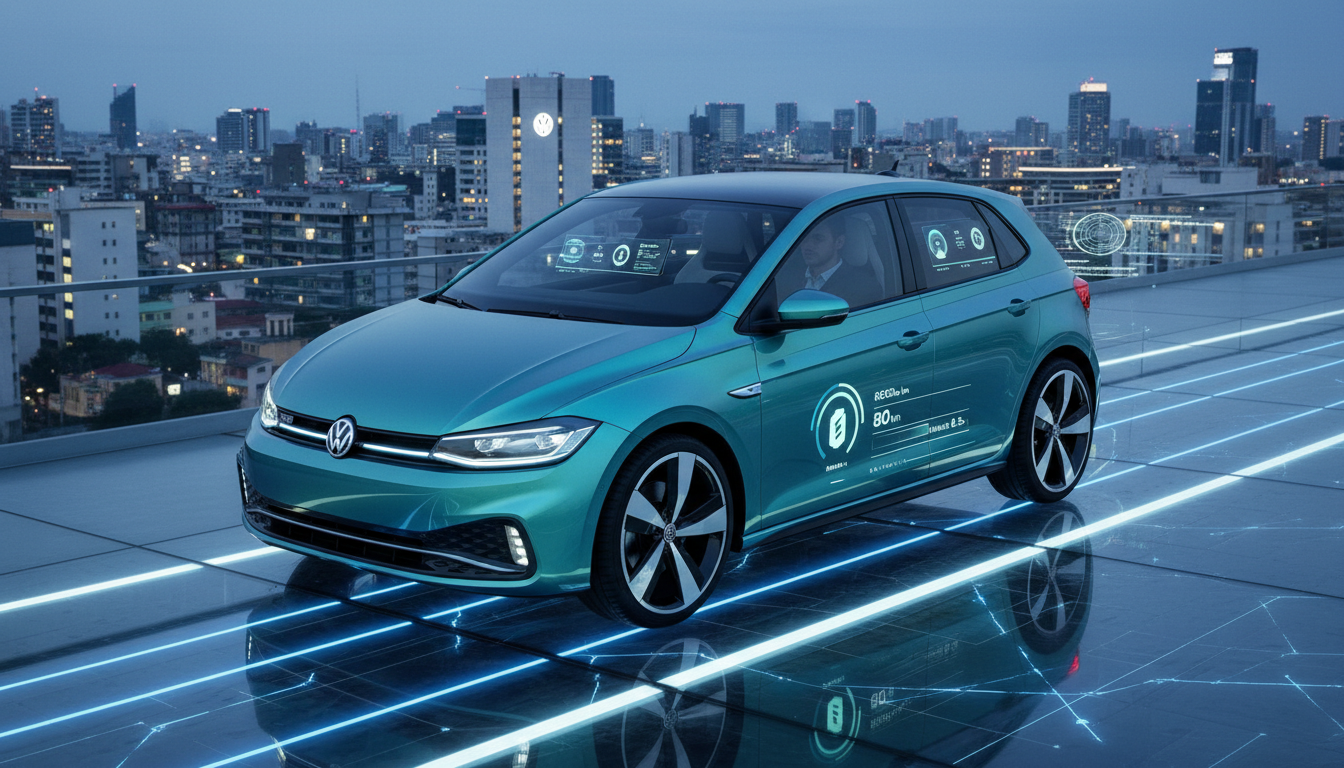

The Volkswagen ID Polo 2026 is poised to redefine the affordable electric vehicle landscape in the UK, offering an anticipated WLTP range of up to 280 miles, rapid DC charging capabilities, and a starting price targeted under £22,000. Born from the acclaimed ID.2all concept, this zero-emission hatchback utilises the front-wheel-drive MEB Entry platform, combining the compact exterior footprint of a traditional Polo with the spacious interior of a Golf. Featuring advanced lithium-iron-phosphate (LFP) battery technology and an intuitive infotainment system with tactile physical buttons, the upcoming ID Polo is engineered to make electric urban mobility accessible, practical, and highly engaging for British drivers.
As the automotive industry accelerates towards full electrification, the demand for a truly accessible, mass-market electric vehicle has never been higher. For decades, the Volkswagen Polo has served as the quintessential supermini for UK motorists, renowned for its build quality, reliability, and everyday practicality. The transition of this iconic badge into the all-electric ID family marks a watershed moment for the manufacturer and the market alike. This comprehensive guide explores the definitive specifications, performance metrics, and technological advancements of the 2026 VW ID Polo, providing prospective buyers and EV enthusiasts with a complete 360-degree overview of what to expect from the next generation of urban transport.
The UK electric vehicle market has seen tremendous growth, largely driven by premium SUVs and executive saloons. However, the true catalyst for mass EV adoption relies on the availability of affordable, compact hatchbacks. Volkswagen’s strategy with the 2026 ID Polo addresses this exact demographic. By leveraging economies of scale and introducing the new MEB Entry (Modular Electric Drive) architecture, Volkswagen aims to deliver a vehicle that does not compromise on quality despite its lower price point.
Unlike the current ID.3 or ID.4, which utilise a rear-wheel-drive bias on the standard MEB platform, the ID Polo will be the first of its kind to feature a front-wheel-drive layout. This engineering decision is critical. It not only reduces manufacturing costs and mechanical complexity but also maximises interior packaging. For the UK driver navigating tight city streets or country lanes, the familiar front-wheel-drive dynamics will provide a reassuring, predictable driving experience that mirrors the internal combustion engine (ICE) Polo they have known for years.
At the heart of any electric vehicle is its battery pack, and the ID Polo is expected to offer versatile options tailored to different driving requirements and budgets. Volkswagen is acutely aware that range anxiety remains a hurdle for some buyers, and the specifications for the 2026 model are designed to put those fears to rest.
Industry insights suggest the ID Polo will be offered with two distinct battery chemistries. The entry-level models are expected to feature a 38 kWh Lithium-Iron-Phosphate (LFP) battery. LFP technology is cheaper to produce, highly durable, and allows for regular charging to 100% without significant degradation. This makes it perfect for daily urban commuting and school runs.
For those requiring longer legs, a larger 56 kWh Nickel-Manganese-Cobalt (NMC) battery option is anticipated. NMC batteries offer a higher energy density, meaning more power can be stored in the same physical space, crucial for a compact supermini.
While official testing is still pending, the targeted WLTP (Worldwide Harmonised Light Vehicle Test Procedure) range for the larger 56 kWh battery is an impressive 280 miles (approx. 450 km). However, seasoned EV drivers understand that real-world conditions in the UK—factoring in cold winter mornings, motorway speeds, and heater usage—will impact these figures.
These figures comfortably cover the average UK weekly driving distance of just under 100 miles, meaning most owners will only need to charge their ID Polo once a week.
A high-capacity battery is only half the equation; efficient charging infrastructure and vehicle charging speeds are equally vital. The 2026 Volkswagen ID Polo is engineered to minimise downtime, whether you are charging at home or on the UK’s growing public rapid charging network.
When undertaking longer journeys on the M1 or M6, rapid charging is essential. The ID Polo is expected to support DC fast charging speeds of up to 125 kW for the larger battery variant. This capability will allow the vehicle to replenish its battery from 10% to 80% in approximately 20 minutes. This is roughly the time it takes to grab a coffee and use the facilities at a motorway service station, seamlessly integrating EV ownership into long-distance travel.
For daily charging, the ID Polo will come equipped with an 11 kW onboard AC charger. For UK homes equipped with a standard 7 kW wallbox, a full charge from empty will take roughly 6 to 8 hours overnight, taking advantage of cheaper off-peak electricity tariffs. Furthermore, the vehicle will feature intelligent charging software, allowing owners to schedule charging sessions via a smartphone app to ensure the car is pre-conditioned and fully charged exactly when needed.
Electric vehicles are renowned for their instant torque and smooth acceleration, and the ID Polo will be no exception. Volkswagen’s goal is to inject a sense of fun and agility into the driving experience, living up to the legacy of the Polo GTI while maintaining the smooth, silent operation expected from a modern EV.
The single electric motor mounted on the front axle is projected to produce up to 226 PS (223 bhp) in its highest specification. This is a staggering amount of power for a supermini, rivaling current hot hatches. The front-wheel-drive configuration ensures that the power is delivered predictably, with advanced traction control systems managing the instant torque to prevent wheel spin in wet British weather conditions.
Performance figures based on the ID.2all concept indicate that the top-spec ID Polo will be capable of sprinting from 0 to 62 mph (0-100 km/h) in under 7.0 seconds. This sprightly acceleration makes merging onto fast-flowing dual carriageways effortless. The top speed will likely be electronically limited to 99 mph (160 km/h) to preserve battery efficiency, which is more than adequate for UK national speed limits.
Volkswagen has learned valuable lessons from the initial launch of the ID.3 and ID.4, particularly regarding interior ergonomics and software stability. The 2026 ID Polo represents a massive leap forward in user-centric design.
One of the most celebrated announcements regarding the ID Polo’s interior is the return to tactile, physical controls. Responding to widespread consumer feedback, Volkswagen is moving away from the highly criticised touch-sensitive sliders for climate control and volume. The new cabin will feature a beautifully knurled rotary volume dial and physical switches for the heating, ventilation, and air conditioning (HVAC) system, ensuring drivers can make adjustments safely without taking their eyes off the road.
The dashboard will be dominated by a crisp, high-definition 12.9-inch central touchscreen interface, powered by the latest generation of VW’s MIB software. This system promises faster processing speeds, intuitive menus, and seamless integration with wireless Apple CarPlay and Android Auto. A secondary 10.9-inch digital driver display will sit behind a redesigned steering wheel, providing essential telemetry, navigation prompts, and battery status at a glance.
Despite its compact exterior length of roughly 4,050 mm, the MEB Entry platform allows for a cavernous interior. The boot space is a revelation for the supermini class. The ID Polo is expected to boast a staggering 490 litres of luggage capacity with the rear seats in place, expanding to 1,330 litres when folded down. It also features a clever hidden storage compartment beneath the boot floor, perfect for stowing charging cables out of sight, and an additional 50-litre storage box under the rear bench seat.
Aesthetically, the ID Polo steps away from the futuristic, jelly-bean styling of the early ID models and returns to a more muscular, traditional hatchback silhouette. It is a design that looks inherently like a Volkswagen.
Key design elements include a prominent, confident C-pillar that echoes the legendary Golf Mk1, giving the car a planted and solid stance. The front fascia features a distinct lack of a traditional grille, replaced by a sleek light bar that connects the advanced IQ.LIGHT LED matrix headlights. Flared wheel arches accommodate aerodynamically optimised alloy wheels ranging from 18 to 20 inches, giving the compact car an aggressive yet sophisticated road presence.
When the highly anticipated Volkswagen ID Polo finally hits the market, securing an allocation or finding the best deal will require navigating the top automotive marketplaces in the United Kingdom. Whether you are looking for brand-new factory orders, pre-registered models, or future used stock, these platforms are the premier destinations for UK car buyers.
The electric supermini segment is rapidly becoming highly competitive. To understand the true value proposition of the 2026 Volkswagen ID Polo, we must compare it against its primary competitors in the UK market: the Peugeot e-208, the Vauxhall Corsa Electric, and the MG4 EV.
| Feature / Specification | VW ID Polo (Est. 56kWh) | Vauxhall Corsa Electric (51kWh) | MG4 EV (51kWh SE) |
|---|---|---|---|
| Target Starting Price | £22,000 | £32,445 | £26,995 |
| WLTP Range | Up to 280 miles | 246 miles | 218 miles |
| 0-62 mph Time | Under 7.0 seconds | 8.2 seconds | 7.7 seconds |
| Boot Space (Seats Up) | 490 Litres | 267 Litres | 363 Litres |
| Max DC Charge Rate | 125 kW | 100 kW | 117 kW |
As the data illustrates, the ID Polo intends to aggressively undercut its European rivals on price while simultaneously offering superior boot capacity, faster charging speeds, and highly competitive range figures. The cavernous 490-litre boot space alone makes it a far more viable primary family car compared to the Corsa Electric or Peugeot e-208.
Volkswagen has publically committed to a starting price of under €25,000 for the European market. Translating this to the UK, factoring in import dynamics and right-hand drive production costs, industry experts anticipate a starting price of approximately £20,000 to £22,000 for the entry-level 38 kWh model.
This aggressive pricing strategy is made possible by the unified battery cell technology developed by Volkswagen’s dedicated battery company, PowerCo, which significantly reduces manufacturing costs. The production version of the ID Polo is slated to be officially unveiled in late 2025, with the first customer deliveries expected to arrive in UK showrooms by the first quarter of 2026.
From an industry standpoint, the Volkswagen ID Polo is not just another car launch; it is a critical pivot point for the brand. For years, the high cost of entry has been the primary barrier to EV adoption for the average UK consumer. By combining the beloved, practical dimensions of a Polo with next-generation EV architecture and a highly attractive price point, Volkswagen is effectively democratising electric mobility.
The decision to revert to physical buttons for critical cabin controls shows a manufacturer that is actively listening to its consumer base. Furthermore, the packaging efficiency of the MEB Entry platform is nothing short of engineering brilliance. Offering Golf-level interior space and class-leading boot capacity within a supermini footprint makes the ID Polo uniquely suited for the UK’s dense urban environments and narrow parking spaces.
If Volkswagen can deliver on their promises regarding price, range, and build quality, the 2026 ID Polo has the potential to dominate the UK sales charts, much like the Ford Fiesta and standard ICE Polo did in previous decades. It is a vehicle that balances emotional design with pragmatic, everyday usability.
Yes, eventually. Volkswagen has indicated that the transition to full electrification means the traditional internal combustion engine (ICE) Polo will be phased out in Europe as stringent Euro 7 emissions regulations and the UK’s ZEV (Zero Emission Vehicle) mandate take effect. The ID Polo is its direct spiritual and practical successor.
Currently, the UK government has ended the Plug-in Car Grant (PiCG) for private car buyers. However, purchasing an ID Polo through a business or salary sacrifice scheme will still yield massive savings via exceptionally low Benefit-in-Kind (BiK) tax rates, which are currently fixed at just 2% until 2025, rising slowly thereafter.
In line with industry standards and current Volkswagen ID models, the ID Polo is expected to come with an 8-year or 100,000-mile high-voltage battery warranty. This guarantees that the battery will retain at least 70% of its original usable capacity during this period, providing long-term peace of mind for buyers.
While official towing capacities have not yet been released, compact EVs on the MEB platform typically have limited towing capabilities. It is likely that the ID Polo will be homologated for a small unbraked trailer or, at the very least, be able to support a tow-bar-mounted bicycle rack, which is a highly requested feature for UK buyers.
Yes. Addressing previous criticisms, the 2026 ID Polo will feature the latest MIB4 software generation. This system is significantly faster, features a permanently visible climate control bar at the bottom of the screen, and is paired with physical shortcut buttons and a volume dial, making it vastly more intuitive and safer to operate while driving.